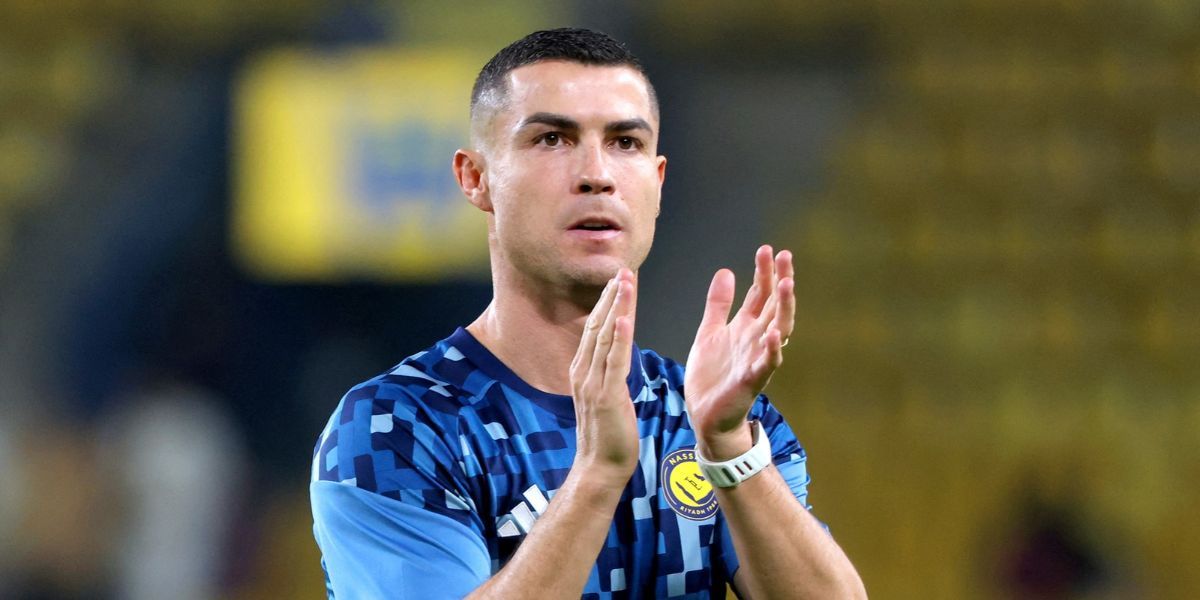
One of football’s defining figures drew a line under his international career. Cristiano Ronaldo, the 41-year-old Portugal captain, announced his retirement from the national team after 23 years, 234 appearances, and a record 146 goals. The news, delivered in a carefully produced video posted to his social channels with the simple caption “Portugal estará sempre em mim” (“Portugal will always be in me”), sent the topic shooting to the top of discussion worldwide.
Ronaldo read a prepared statement that mixed pride, thankfulness and the quiet acknowledgement that some decisions are made with the heart as much as the head.
“To the Portuguese people, the day has come for me to hand back the number seven shirt of our national team,” he said. “I never felt it belonged to me alone, but for 23 years I had the privilege and the responsibility of wearing it.” He spoke of a journey that began in August 2003 and “changed my life forever,” thanked family, teammates, coaches and the public who had celebrated his goals, and closed by noting that if any of those moments had brought people joy or pride in their country, “it was all worth it.”
Weeks earlier, Ronaldo had walked out of the Portugal camp after a public disagreement with head coach Jorge Jesus over selection. He had been taken to a match in Norway but left on the bench; when he learned he would not start the subsequent game against Denmark, he left the training base. The Portuguese federation responded with a 30-day suspension and a modest fine. Although there had been speculation he might return for the November Nations League fixtures, the video made clear the international chapter was closed. His final appearance came on 24 September 2026, a 1-0 win over Wales in Lisbon, where he was substituted around the hour mark.
The statistical ledger is unmatched in men’s international football. Ronaldo finishes with 234 caps (the most ever) and 146 goals, both records. He scored in six different World Cup editions (2006 through 2026), the first player to do so, and holds the all-time European Championship scoring record with 14 goals across six tournaments. In competitive matches alone, he delivered more than 120 of those goals. He captained Portugal to their first major trophy at Euro 2016 (they beat France in the final) and added UEFA Nations League titles in 2019 and 2025. Ten hat-tricks, goals against 49 different opponents, and a scoring rate of roughly 0.62 goals per game complete the picture. Second on the all-time goals list is Lionel Messi, who recently closed his Argentina chapter with 126 goals in 208 caps; Ronaldo’s edge is decisive.
Debut came as an 18-year-old against Kazakhstan in a friendly. The first senior goal arrived the following year at Euro 2004. From there the arc is familiar: the teenage winger became the complete forward, the leader who dragged Portugal through qualifying campaigns and major tournaments, and the athlete who refused to accept that age alone should end the story. At 41, he was still scoring at the 2026 World Cup (Portugal exited in the round of 16 to eventual champions Spain) and still capable of moments that stopped stadiums.
The response mixed immediate tributes, nostalgia and, of course, the inevitable Messi comparisons.
Fans shared clips of the SIUUU celebration, old goals, and messages of thanks
Club football continues. Ronaldo remains under contract with Al-Nassr in Saudi Arabia through 2027 and is reportedly closing in on a career total of 1,000 goals (club and country combined, currently around 985). The international number 7 shirt now belongs to the next generation. Still, the records and the cultural imprint (the celebration, the longevity, the persistent pursuit of the next milestone) will not be handed back.
For a generation of football fans, the announcement marks the end of something that seemed permanent. Ronaldo’s international career spanned the period in which football became truly globalised, social media amplified every goal, and the sport’s commercial reach expanded dramatically. He was both a product and a driver of that change. The final video is short by modern farewell standards, yet the numbers and memories that accompany it are not. Portugal will, as he said, always be in him; for many who watched the journey, the reverse is also true.